



A specialty wrap is a vinyl graphic applied to a non-vehicle or irregular surface such as a boat hull, an aircraft fuselage, a concrete pump truck, a trailer skin, or a beer keg. The film and the printing are the same quality we use on cars. What changes is the surface underneath.
From Airplanes to Beer Kegs: Specialty Vinyl Wraps for Any Surface
Over more than 25 years of vinyl work, we have put graphics on jet boats, airplanes, concrete pump trucks, motorcycle helmets, hotel interiors, and beer kegs. These are the jobs our crew fights over. Bring us the thing you assumed could not be wrapped and let us tell you what is possible.
Specialty work is where a wrap shop either knows what it is doing or finds out the hard way that they don’t. A truck door is flat, clean and predictable. A hull with compound curves, a trailer skin studded with rivets, or an excavator arm caked in hydraulic film all behave differently under vinyl, and the difference shows up months later as lifted edges and tented seams. We plan for that up front so your graphics still look sharp after a season of real use.
What Counts as a Specialty Wrap Project?
A specialty wrap is any job that falls outside a standard car, truck, van, or SUV wrap, either because of the surface, the shape, or the size of what is being covered. In practice that means work like:
- Jet boats, cruisers and other marine hulls, plus consoles and swim platforms
- Aircraft graphics, fuselage lettering, and tail numbers
- Enclosed trailers, box trucks, and riveted or corrugated panels
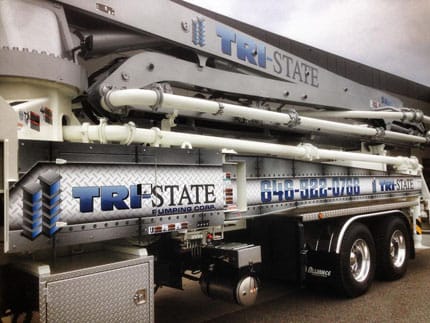
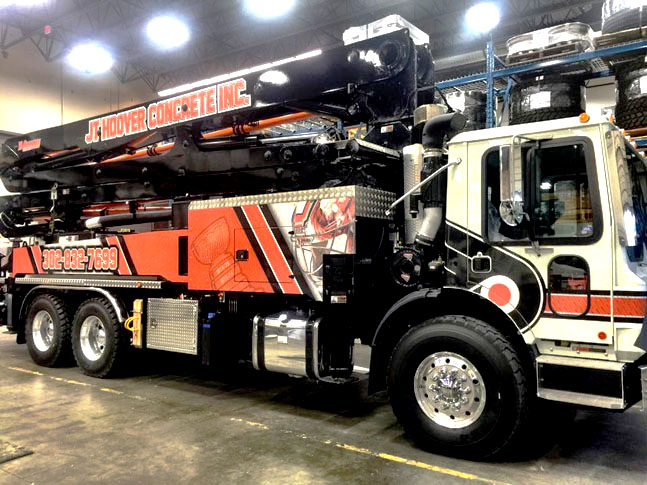
- Concrete pumps, excavators, loaders, and other heavy machinery
- Kegs, coolers, kiosks, helmets, dance floors, and promotional one-offs
- Interior surfaces in hotels, showrooms, and event spaces
Trailers, Equipment, and Riveted Surfaces
Rivets and corrugation are the two things that separate a real trailer wrap from a sticker job. Vinyl stretched flat across a riveted panel traps a bubble over every head, and, if those bubbles are only squeegeed down, they come back as wrinkles once the panel heats up in the sun. Our installers work the film in with heat and a rivet brush, using short strokes to break the large bubble into smaller ones, then burnishing in a circular motion at an angle to the rivet head until the vinyl reads as painted on. Corrugated valleys get the same patient treatment so the film sits down in the channel instead of tenting across it.
Heavy equipment adds a different set of problems. Machinery panels are textured, they flex, and they live around mud, fuel, and hydraulic fluid. Cast film conforms to that texture in a way cheaper calendared vinyl never will, and a laminated wrap takes the jobsite abuse that would otherwise dull your paint. Keeping the graphics clean with mild soap and a microfiber cloth, and keeping degreasers off them, does most of the maintenance work for you.
Odd Substrates and One-Off Objects
Plenty of specialty jobs come down to material science rather than size. Textured plastics, powder coat, raw metal, and low surface energy panels do not grip adhesive the way automotive paint does. On those surfaces, we test adhesion first, scuff where scuffing helps, and use an adhesion promoter around edges, recesses, and tight curves, which are always the first places a wrap tries to release. Small curved objects like helmets and kegs get their graphics split into panels and shaped with heat so the artwork stays proportional instead of distorting around the curve.
How Long Does a Specialty Wrap Take?
Longer than a vehicle, and the reason is prep rather than printing. On a car, the surface arrives in a known condition. On a hull, a machine, or an aircraft, cleaning, decontamination, adhesion testing, and the seam plan all happen before anyone unrolls any film, and that stage decides how long the finished wrap lasts. Give us photos and rough dimensions and we will give you a schedule for your specific item before you commit.
Here is how a job runs:
- Tell us what it is. Photos, rough dimensions, and what the item goes through day to day are usually enough for us to say yes or no quickly.
- We assess the surface. Material, texture, condition and any hardware in the way determine the film and the seam plan.
- Artwork goes to our in-house design team and comes back as a proof mapped to the real shape, not a flat mockup.
- We print on 3M or Avery cast vinyl with a UV protective laminate.
- We prep and install, on site when the piece cannot come to the shop.
Questions About Specialty Wrap Projects
It is a vinyl wrap applied to a non-vehicle or irregular surface: a boat hull, an aircraft fuselage, a trailer skin, a piece of heavy equipment, an interior wall, or a promotional item such as a keg or a helmet. Same films and printing as our vehicle wraps, different surface preparation.
Our wraps start at $495 for a half wrap and $1,395 for a full wrap, and a specialty item is priced against the same variables: how much surface area the film has to cover, what condition that surface is in, and how complex the artwork is. A hull or a machine takes more prep hours than a van of the same size, so prep is usually the line that moves the number. Send us photos and dimensions, and we’ll send you a free quote.
We guarantee our product for 7 years, and our wraps typically last at least 9 with reasonable care. Marine and jobsite conditions are harder on vinyl than a commute, so a hull that sits in salt water year round or a loader working in gravel will age faster than an interior wall wrap.
No. We wrap boats out of the water and fully dry. Salt, moisture, and oxidation all have to be off the gelcoat before film goes on, so haul out and a cure window before relaunch are part of the schedule.
No. A properly installed and properly removed wrap shields what is beneath it from UV, minor abrasion, and grime. On boats and equipment that protection is often worth as much as the graphics, because the original gelcoat or paint comes out of the wrap in better shape than it went in.
Yes, for pieces that cannot come to the shop, such as large machinery, hull work, and building interiors. The surface still needs to be clean, dry, and in a space controlled enough to hold temperature during application, so we confirm those conditions before scheduling.